
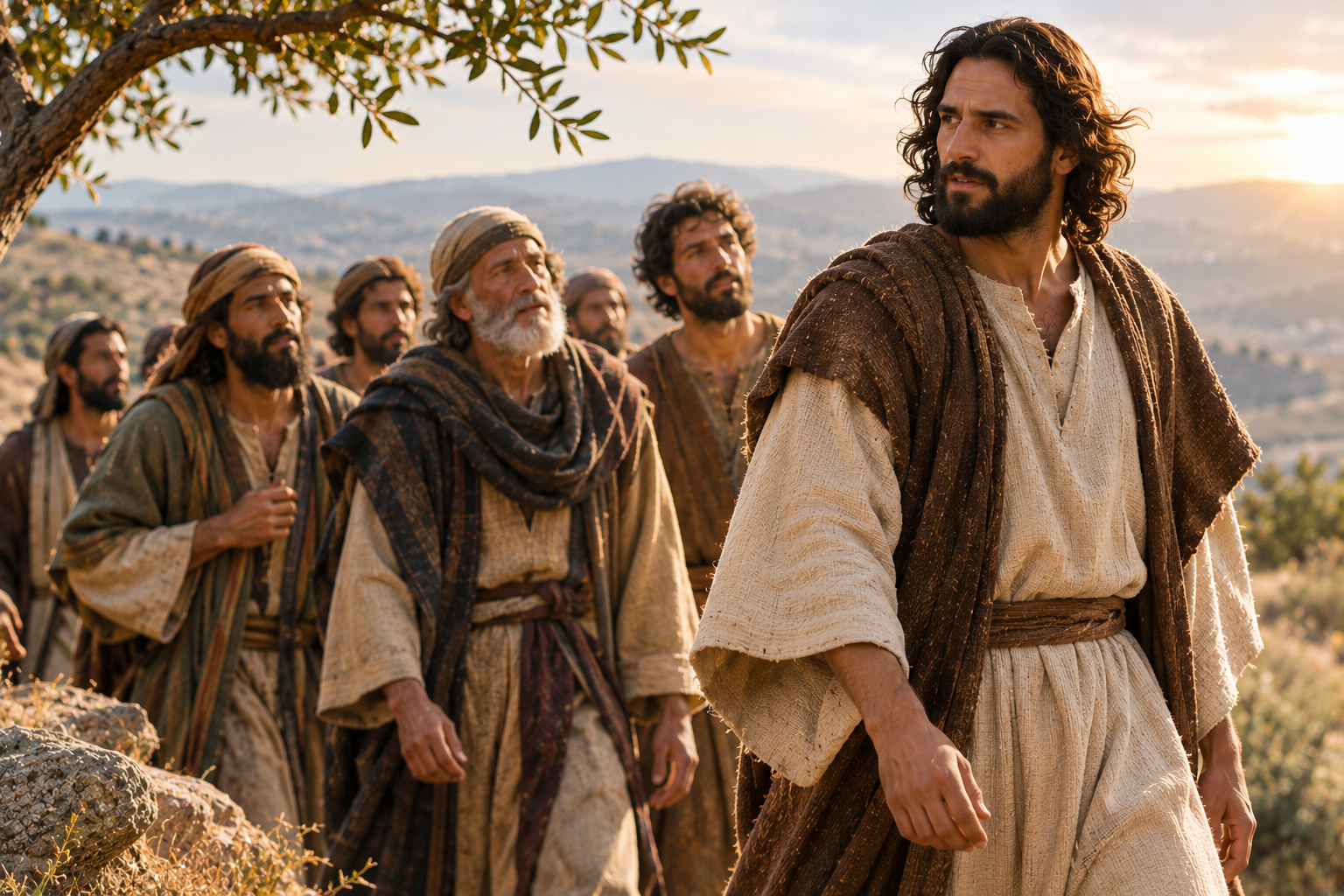
Are All Christians Called to Be Disciples?
Is discipleship an essential part of the Christian life, or is it an advanced level of spiritual commitment reserved for particularly devoted believers? Within contemporary evangelical Christianity, a distinction is sometimes made between accepting Jesus Christ as Savior and subsequently choosing to follow Him as a disciple. According to this understanding, a person may possess eternal life through faith while remaining largely uninvolved in the obedience, spiritual formation, and responsibilities ordinarily associated with discipleship.
This study examines whether such a distinction adequately represents the teaching of the New Testament. Through an exegetical examination of Jesus' invitations to follow Him, the terminology of discipleship in Acts, the Great Commission, and Paul's teaching concerning salvation and sanctification, it argues that discipleship is not a separate spiritual classification into which Christians may optionally enter after conversion. Rather, discipleship describes the ordinary identity and continuing vocation of those who belong to Jesus Christ.
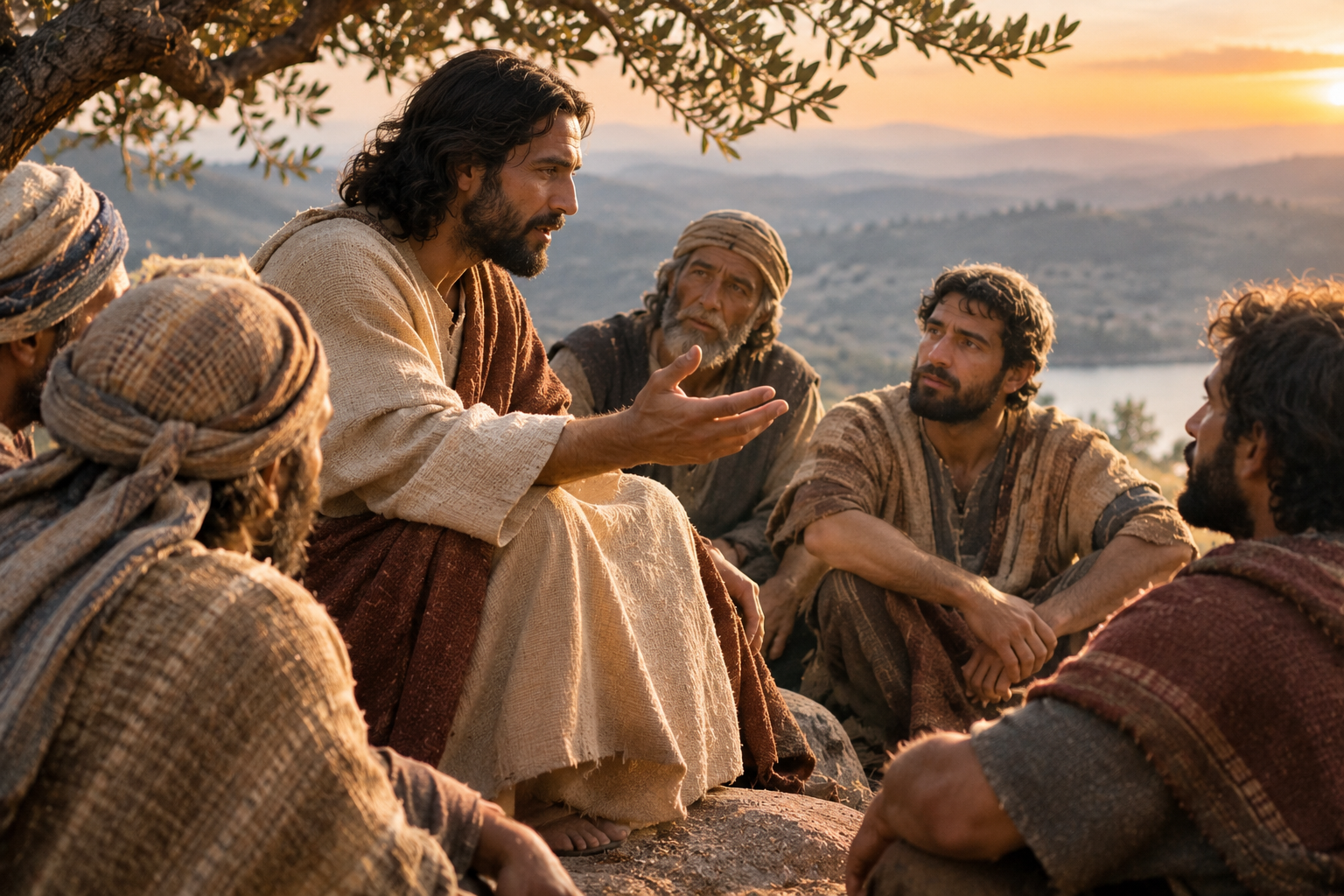
The Great Commission: Go and Make Disciples
Few passages of Scripture are more familiar to evangelical Christians than Matthew 28:18–20.
Churches frequently reference the Great Commission when discussing missions, evangelism, outreach, and church growth. Mission statements often identify reaching the lost as a central responsibility, and congregations devote considerable resources to worship services, evangelistic campaigns, and attracting new members.
These activities can be valuable expressions of Christian ministry.
Nevertheless, an important question remains:
Are churches actually accomplishing what Jesus commanded them to do?

What Is Christian Discipleship? A Biblical Definition and Its Place in the Contemporary Church
The word discipleship is frequently used in contemporary churches, yet its meaning is not always clearly understood.
Churches advertise discipleship classes, discipleship groups, leadership development programs, mentoring relationships, and spiritual growth initiatives. Some programs are designed for recent converts, while others target believers who desire a deeper commitment to Christ.
These activities may serve legitimate purposes. However, their existence raises an important question.
Is discipleship something a Christian participates in, or is it fundamental to what it means to be a Christian?
The distinction is more than semantic.

Is Withholding Sexual Intimacy a Sin?
Sexual intimacy is one of the most personal and potentially vulnerable dimensions of marriage. It can communicate affection, belonging, acceptance, and the joy of shared life. Yet it can also become an area of misunderstanding, disappointment, conflict, and emotional pain.
One spouse may desire sexual intimacy more frequently than the other. A husband or wife may experience prolonged rejection without understanding its cause. Physical illness, emotional exhaustion, unresolved conflict, or previous experiences of sexual harm may affect the desire or ability to participate in sexual relations.
In other marriages, sexual intimacy becomes a means of exercising power. One spouse may deliberately withhold affection to punish the other, obtain a concession, or communicate resentment. Conversely, a spouse seeking intimacy may use guilt, threats, or appeals to biblical authority to pressure the other into sexual activity.

What Does the Bible Teach About Sexual Intimacy in Marriage?
Sexuality occupies an unusual position within contemporary Christian discussion. On the one hand, Scripture speaks openly about sexual desire, marital pleasure, and the physical union of husband and wife. On the other hand, many Christians have inherited attitudes that associate sexual expression primarily with temptation, shame, or moral danger.
As a result, Christian teaching frequently emphasizes the prohibition of sexual immorality without giving equal attention to Scripture's positive presentation of marital intimacy.
This imbalance can leave married couples with a distorted understanding of sexuality. Some may regard sexual intercourse as little more than a biological necessity or marital obligation. Others may assume that physical pleasure is its primary purpose, without recognizing its deeper relational and theological significance.
Neither approach adequately represents the biblical witness.

What Is the Biblical Definition of Christian Marriage?
Marriage is one of humanity's oldest and most recognizable social institutions. Yet its meaning, purpose, and obligations remain subjects of considerable discussion within contemporary society and the Christian church.
Is marriage primarily a legal agreement between two individuals? Is it a relationship established through romantic love and mutual consent? Is its purpose companionship, sexual intimacy, procreation, personal fulfillment, or the formation of a family?
Each of these considerations addresses some aspect of marriage, but none by itself adequately explains the biblical understanding.
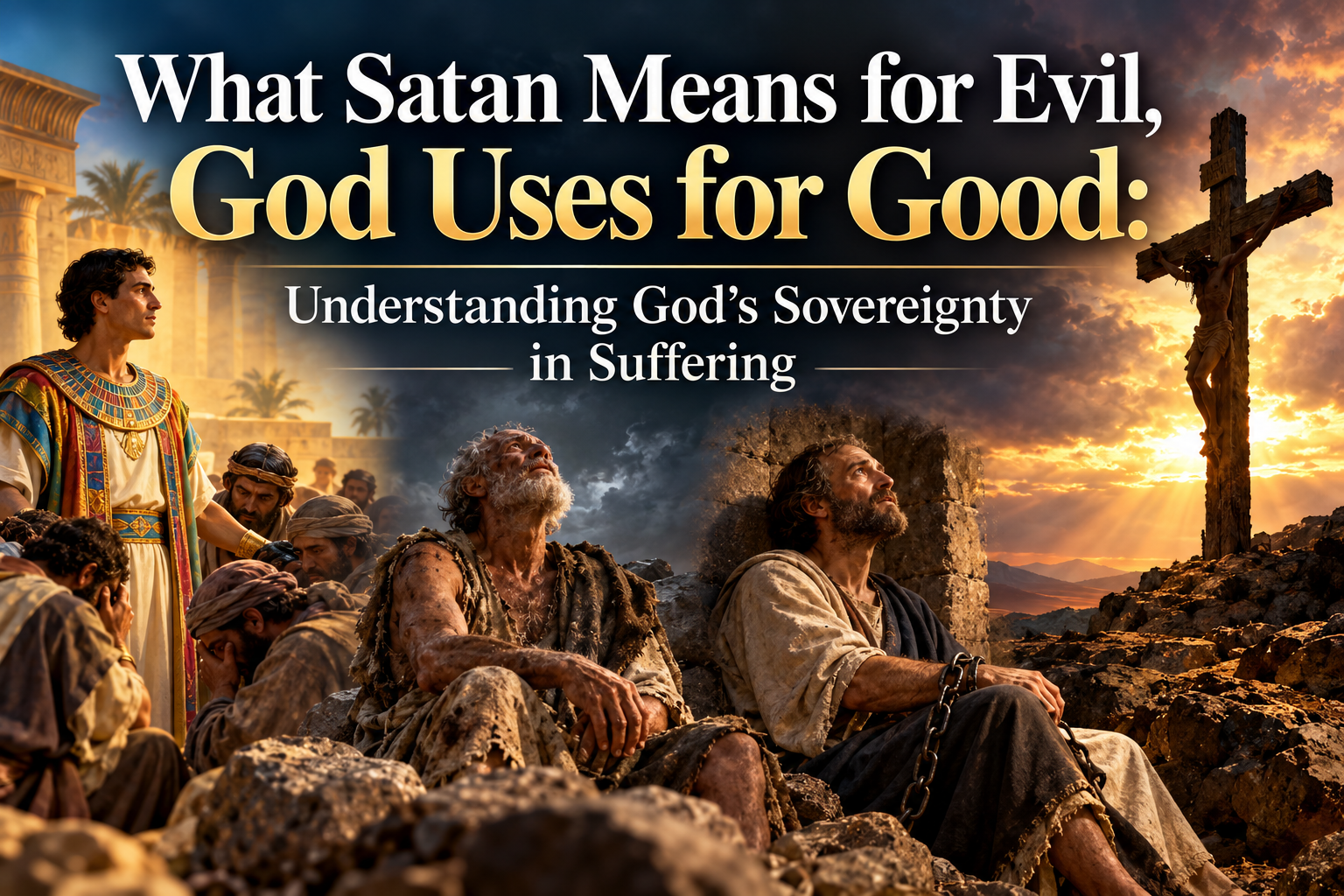
What Satan Means for Evil, God Uses for Good: Understanding God's Sovereignty in Suffering
One of the most challenging questions confronting Christians is why an all-powerful, perfectly good God permits evil and suffering to exist. The question becomes especially difficult when suffering appears undeserved, prolonged, or devastating.
Why does God allow faithful believers to experience debilitating illness, persecution, betrayal, financial hardship, or the loss of loved ones? Why does He sometimes answer prayers for deliverance while allowing other believers to endure years of suffering? And if Satan seeks to destroy God's people, how can God permit his activity without compromising His sovereignty?
Scripture does not answer every philosophical question concerning the existence of evil. Nevertheless, it reveals something remarkable about God's relationship to evil and suffering: evil never possesses the authority to frustrate God's ultimate purposes.

Paul's Thorn in the Flesh: Finding God's Strength in Human Weakness
Why did God refuse to remove Paul's thorn in the flesh? This biblical and theological study examines how God uses suffering to cultivate humility, dependence, perseverance, and Christlikeness—and why Paul could declare, “For when I am weak, then I am strong.”

What Is the Millennium? A Premillennial Study of Revelation 20
What does the Bible teach about the thousand-year reign of Jesus Christ? This study examines Revelation 20, the major millennial interpretations, God's covenant promises, early Christian testimony, and the Christian hope of Christ's victorious kingdom.

The Seventy Weeks of Daniel: A Biblical and Historical Examination of Daniel 9:24–27
Few passages of Old Testament prophecy have generated as much discussion concerning the timing of the Messiah's arrival as Daniel 9:24–27.
For centuries, Christian interpreters have understood this prophecy as announcing the coming of Jesus Christ, His sacrificial death, the destruction of Jerusalem, and the ultimate fulfillment of God's purposes for Israel.
Some have gone further, arguing that the prophecy provides sufficient chronological information to calculate the precise day Jesus entered Jerusalem shortly before His crucifixion.
Others maintain that such calculations depend upon assumptions not explicitly established by Scripture.
The disagreement raises several important questions.
What did Daniel originally understand about the prophecy? What relationship does it bear to Jeremiah's seventy years of captivity? What do the seventy weeks represent? Who is the Messiah or Anointed One identified in the passage? And can the chronology genuinely establish a precise date for Jesus' arrival?
These questions must be answered by beginning with the biblical text itself.

The Rapture of the Church: What Is It and When Will It Occur?
The promise of Jesus Christ's return has occupied a central place in Christian expectation since the apostolic age. Jesus assured His disciples that His departure would not be permanent and that He would receive them to Himself (John 14:1–3). The angels at His ascension similarly declared that He would return (Acts 1:9–11).
Among the events associated with Christ's return is the gathering of believers commonly called the rapture of the church.
The apostle Paul describes this event in his first letter to the Thessalonians:
"Then we who are alive and remain shall be caught up together with them in the clouds to meet the Lord in the air. And thus we shall always be with the Lord." (1 Thess. 4:17, NKJV)
This passage establishes that living believers will be gathered together with resurrected believers to meet Christ.
However, it does not explicitly identify the event's chronological relationship to the future Tribulation.

Does God Still Have Future Plans for the Nation of Israel?
Throughout the Old Testament, God makes extraordinary promises concerning the descendants of Abraham, Isaac, and Jacob. These promises encompass the formation of a nation, possession of a particular land, the establishment of an enduring royal dynasty, spiritual renewal, and the extension of divine blessing to the nations of the world (Gen. 12:1–3; 15:18–21; 17:7–8; 2 Sam. 7:12–16; Jer. 31:31–37).
Yet the New Testament introduces a significant theological question.
With the coming of Jesus Christ, the establishment of the church, and the inclusion of Gentile believers in the blessings of salvation, what becomes of the promises made specifically to Israel?

When the Church Wounds Its Own: Biblical Responsibility, Justice, and Healing for Survivors of Abuse
The Christian church is intended to be a community in which the vulnerable find protection, the suffering receive compassion, and those who have been wounded encounter the restorative ministry of Jesus Christ. Scripture repeatedly describes God's people as responsible for caring for the oppressed, defending those who cannot defend themselves, and bearing one another's burdens.
Yet what happens when the institution entrusted with these responsibilities becomes the source of suffering?
What happens when a pastor, elder, ministry leader, or trusted church representative sexually exploits, manipulates, intimidates, or otherwise abuses someone under their spiritual care? What responsibility does the congregation bear when church leadership ignores warnings, minimizes allegations, protects an offender, or fails to intervene?

When Shepherds Betray the Flock
A Crisis That Requires More Than a Settlement
For Christians who have loved the church, served in ministry, and trusted pastoral leaders, reports of sexual abuse can produce grief as well as anger. The injury reaches beyond the conduct of one offender. When leaders dismiss a disclosure or protect a colleague at another person’s expense, the community entrusted with spiritual care can become a source of further harm. The question is therefore theological: what does faithfulness to Jesus require when someone entrusted with His flock abuses that trust?
A settlement may compensate a claimant and end litigation. It does not, by itself, establish that a church has confessed wrongdoing, disciplined responsible leaders, repaired its practices, or provided adequate care. Neither an institution’s financial payment nor its public statement can substitute for the moral responsibilities Scripture places upon shepherds. God condemns leaders who serve themselves while neglecting the weak and injured. (Ezek. 34:1–10.)

Forgiveness, Confrontation, and Church Discipline: Understanding Matthew 18:15–20
Forgiveness and confrontation may initially seem incompatible. If we forgive, why address the offense? If we confront, are we refusing mercy? Jesus brings both responsibilities together. Matthew 18 teaches his disciples to pursue a sinning brother while refusing the mercilessness illustrated in the parable that follows. Love seeks a person’s restoration and takes the injury seriously. (Matt. 18:15–35)
Jesus states the purpose plainly: “Moreover if your brother sins against you, go and tell him his fault between you and him alone. If he hears you, you have gained your brother.” (Matt. 18:15) The desired outcome is a recovered relationship and a brother who receives correction. Winning an argument or humiliating an opponent would distort that purpose.
The earlier studies of compassion and suffering emphasized that love becomes concrete in how we respond to another person’s need. Here love also requires moral courage. Refusing to address destructive conduct can leave both the wrongdoer and those harmed without the help they need. Yet correction must be governed by humility, truth, and concern for everyone involved. (1 John 3:16–18; Gal. 6:1–2)

God’s Purpose in Suffering: A Study of Romans 8:18–39
When suffering continues, we often ask more than whether it will end. We ask whether God remains good, whether he hears us, and whether our lives still have meaning. Romans 8:18–39 speaks to these questions with an assurance grounded in God’s saving work. Paul does not explain the specific reason for every affliction. He does show where God is taking his children and why suffering cannot separate them from his love. (Rom. 8:18–39)
The chapter begins with freedom from condemnation in Christ and describes believers as God’s adopted children. Their suffering therefore occurs within an established relationship of grace. Paul connects sharing Christ’s sufferings with sharing his glory, but this does not mean our suffering earns salvation or supplements Christ’s atoning death. Those who belong to Christ share his path through affliction toward resurrection life. (Rom. 8:1, 14–17; 3:24–26)
This relationship helps us read the passage as a whole: future glory gives hope, the Spirit helps present weakness, God carries forward his saving purpose, and Christ’s love remains secure. The sufferer’s immediate experience matters, yet it cannot provide the final verdict on God’s faithfulness. (Rom. 8:18–39)

What Does Philippians 4:6–7 Really Teach Us About Anxiety?
Philippians 4:6–7 calls believers to bring every concern to God through prayer, supplication, and thanksgiving, with the assurance that his peace will guard their hearts and minds in Christ Jesus. Read within Philippians 4:2–9 and the wider biblical witness, this exhortation challenges distrustful worry without condemning responsible concern or making involuntary distress a sufficient measure of spiritual failure. The promised peace is a real gift of God within relationship to Christ; the passage does not specify immediate symptom elimination or the removal of every threatening circumstance. This article distinguishes reconciliation with God from the experience of his peace, relates prayer to truthful thought and faithful practice, and places anxiety within the realities of embodied weakness, Christian community, and resurrection hope. Its pastoral conclusion is that believers should pursue trust and obedience while receiving patient spiritual support and appropriate professional care.

What Does Matthew 25:31–46 Mean?
Christians often use “the least of these” to describe anyone who is poor, sick, displaced, or overlooked. The phrase expresses an important concern for vulnerable people. Yet understanding a biblical passage requires asking whom Jesus actually identifies, how the words function within their context, and what conclusions the passage supports. Matthew 25 is a judgment scene in which the King explains the eternal significance of people’s treatment of those who belong to him.

When God Doesn't Remove Suffering: Understanding Grace in Weakness
What are we to believe when we ask God to remove suffering and the suffering remains? This question becomes urgent when pain continues for years, a loved one’s condition worsens, or prayer seems to meet silence. An explanation that sounds satisfactory in a classroom may feel thin beside a hospital bed. We need a theology that can tell the truth about anguish while giving us reason to trust God.

What Does the Bible Say About Anxiety, Worry, and Fear?
Anxiety, worry, and fear involve the whole person, affecting thoughts, emotions, bodily responses, relationships, and spiritual life. Scripture addresses these experiences through its teaching about God’s providence, human responsibility, humility, prayer, love, and the care of the Christian community. Jesus confronts worry that expresses distrust of the Father, yet Scripture also portrays faithful believers experiencing fear, anguish, and distress. Consequently, neither every anxious feeling nor every anxiety disorder should automatically be classified as personal sin.