

As Sorrowful, Yet Always Rejoicing
Can Christians experience genuine sorrow and joy at the same time? This biblical and theological study examines Paul's remarkable declaration, “as sorrowful, yet always rejoicing” (2 Corinthians 6:10). Drawing upon Scripture, C. S. Lewis, Thomas Manton, and contemporary biblical scholarship, it explores the relationship between suffering, gratitude, contentment, and Christian hope, demonstrating how a thankful heart can cultivate enduring joy even amid life's most difficult circumstances.
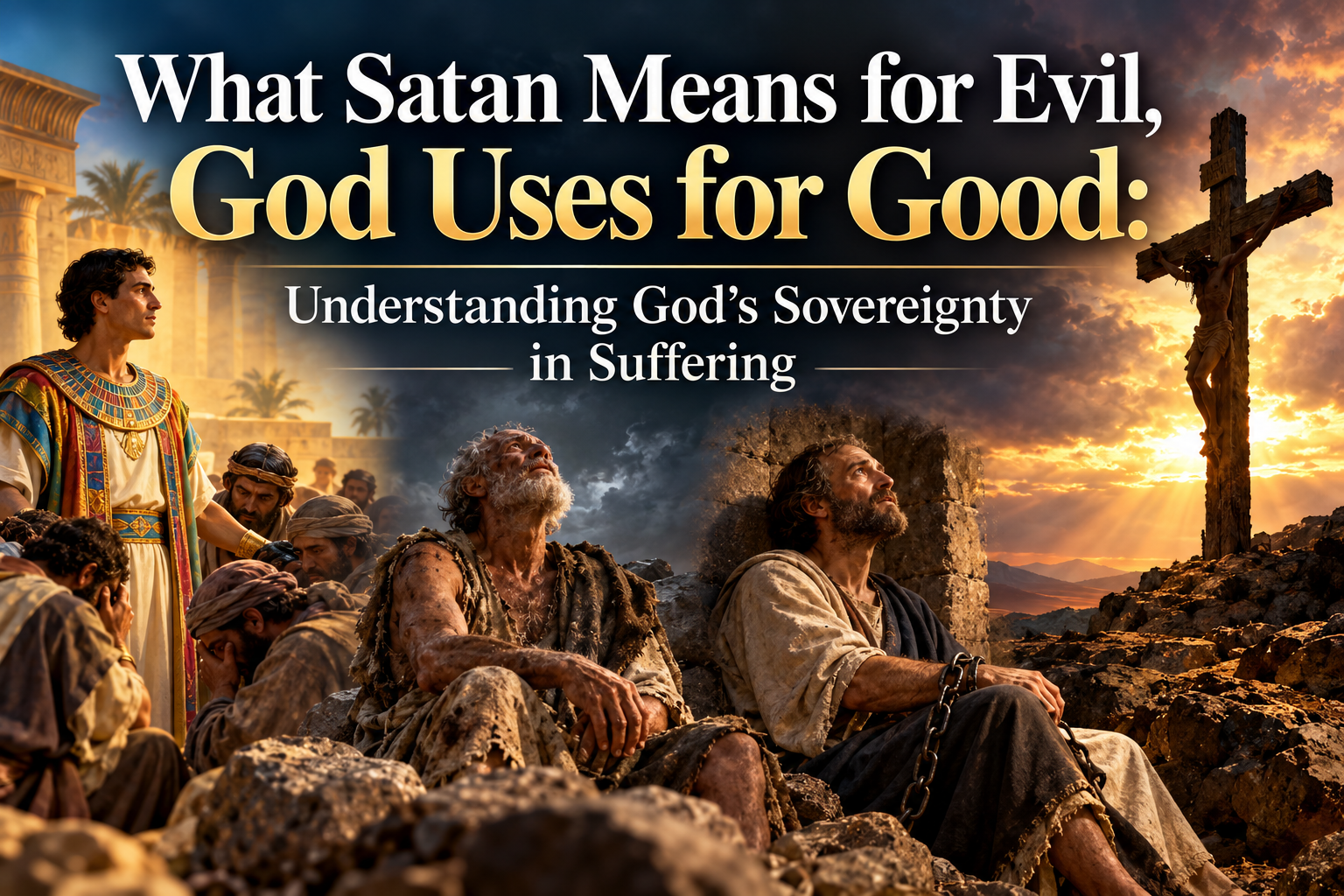
What Satan Means for Evil, God Uses for Good: Understanding God's Sovereignty in Suffering
One of the most challenging questions confronting Christians is why an all-powerful, perfectly good God permits evil and suffering to exist. The question becomes especially difficult when suffering appears undeserved, prolonged, or devastating.
Why does God allow faithful believers to experience debilitating illness, persecution, betrayal, financial hardship, or the loss of loved ones? Why does He sometimes answer prayers for deliverance while allowing other believers to endure years of suffering? And if Satan seeks to destroy God's people, how can God permit his activity without compromising His sovereignty?
Scripture does not answer every philosophical question concerning the existence of evil. Nevertheless, it reveals something remarkable about God's relationship to evil and suffering: evil never possesses the authority to frustrate God's ultimate purposes.

Paul's Thorn in the Flesh: Finding God's Strength in Human Weakness
Why did God refuse to remove Paul's thorn in the flesh? This biblical and theological study examines how God uses suffering to cultivate humility, dependence, perseverance, and Christlikeness—and why Paul could declare, “For when I am weak, then I am strong.”

When the Church Wounds Its Own: Biblical Responsibility, Justice, and Healing for Survivors of Abuse
The Christian church is intended to be a community in which the vulnerable find protection, the suffering receive compassion, and those who have been wounded encounter the restorative ministry of Jesus Christ. Scripture repeatedly describes God's people as responsible for caring for the oppressed, defending those who cannot defend themselves, and bearing one another's burdens.
Yet what happens when the institution entrusted with these responsibilities becomes the source of suffering?
What happens when a pastor, elder, ministry leader, or trusted church representative sexually exploits, manipulates, intimidates, or otherwise abuses someone under their spiritual care? What responsibility does the congregation bear when church leadership ignores warnings, minimizes allegations, protects an offender, or fails to intervene?

When Shepherds Betray the Flock
A Crisis That Requires More Than a Settlement
For Christians who have loved the church, served in ministry, and trusted pastoral leaders, reports of sexual abuse can produce grief as well as anger. The injury reaches beyond the conduct of one offender. When leaders dismiss a disclosure or protect a colleague at another person’s expense, the community entrusted with spiritual care can become a source of further harm. The question is therefore theological: what does faithfulness to Jesus require when someone entrusted with His flock abuses that trust?
A settlement may compensate a claimant and end litigation. It does not, by itself, establish that a church has confessed wrongdoing, disciplined responsible leaders, repaired its practices, or provided adequate care. Neither an institution’s financial payment nor its public statement can substitute for the moral responsibilities Scripture places upon shepherds. God condemns leaders who serve themselves while neglecting the weak and injured. (Ezek. 34:1–10.)

Forgiveness, Confrontation, and Church Discipline: Understanding Matthew 18:15–20
Forgiveness and confrontation may initially seem incompatible. If we forgive, why address the offense? If we confront, are we refusing mercy? Jesus brings both responsibilities together. Matthew 18 teaches his disciples to pursue a sinning brother while refusing the mercilessness illustrated in the parable that follows. Love seeks a person’s restoration and takes the injury seriously. (Matt. 18:15–35)
Jesus states the purpose plainly: “Moreover if your brother sins against you, go and tell him his fault between you and him alone. If he hears you, you have gained your brother.” (Matt. 18:15) The desired outcome is a recovered relationship and a brother who receives correction. Winning an argument or humiliating an opponent would distort that purpose.
The earlier studies of compassion and suffering emphasized that love becomes concrete in how we respond to another person’s need. Here love also requires moral courage. Refusing to address destructive conduct can leave both the wrongdoer and those harmed without the help they need. Yet correction must be governed by humility, truth, and concern for everyone involved. (1 John 3:16–18; Gal. 6:1–2)

God’s Purpose in Suffering: A Study of Romans 8:18–39
When suffering continues, we often ask more than whether it will end. We ask whether God remains good, whether he hears us, and whether our lives still have meaning. Romans 8:18–39 speaks to these questions with an assurance grounded in God’s saving work. Paul does not explain the specific reason for every affliction. He does show where God is taking his children and why suffering cannot separate them from his love. (Rom. 8:18–39)
The chapter begins with freedom from condemnation in Christ and describes believers as God’s adopted children. Their suffering therefore occurs within an established relationship of grace. Paul connects sharing Christ’s sufferings with sharing his glory, but this does not mean our suffering earns salvation or supplements Christ’s atoning death. Those who belong to Christ share his path through affliction toward resurrection life. (Rom. 8:1, 14–17; 3:24–26)
This relationship helps us read the passage as a whole: future glory gives hope, the Spirit helps present weakness, God carries forward his saving purpose, and Christ’s love remains secure. The sufferer’s immediate experience matters, yet it cannot provide the final verdict on God’s faithfulness. (Rom. 8:18–39)

What Does Philippians 4:6–7 Really Teach Us About Anxiety?
Philippians 4:6–7 calls believers to bring every concern to God through prayer, supplication, and thanksgiving, with the assurance that his peace will guard their hearts and minds in Christ Jesus. Read within Philippians 4:2–9 and the wider biblical witness, this exhortation challenges distrustful worry without condemning responsible concern or making involuntary distress a sufficient measure of spiritual failure. The promised peace is a real gift of God within relationship to Christ; the passage does not specify immediate symptom elimination or the removal of every threatening circumstance. This article distinguishes reconciliation with God from the experience of his peace, relates prayer to truthful thought and faithful practice, and places anxiety within the realities of embodied weakness, Christian community, and resurrection hope. Its pastoral conclusion is that believers should pursue trust and obedience while receiving patient spiritual support and appropriate professional care.

When God Doesn't Remove Suffering: Understanding Grace in Weakness
What are we to believe when we ask God to remove suffering and the suffering remains? This question becomes urgent when pain continues for years, a loved one’s condition worsens, or prayer seems to meet silence. An explanation that sounds satisfactory in a classroom may feel thin beside a hospital bed. We need a theology that can tell the truth about anguish while giving us reason to trust God.

What Does the Bible Say About Anxiety, Worry, and Fear?
Anxiety, worry, and fear involve the whole person, affecting thoughts, emotions, bodily responses, relationships, and spiritual life. Scripture addresses these experiences through its teaching about God’s providence, human responsibility, humility, prayer, love, and the care of the Christian community. Jesus confronts worry that expresses distrust of the Father, yet Scripture also portrays faithful believers experiencing fear, anguish, and distress. Consequently, neither every anxious feeling nor every anxiety disorder should automatically be classified as personal sin.

Where Is God in Alzheimer’s, Dementia, and the Loss of the Mind?
Alzheimer’s disease and other forms of dementia present a profound theological challenge because they progressively impair memory, language, reasoning, self-awareness, recognition, and the ability to express faith. If human identity is located primarily in consciousness or rational cognition, dementia can appear to diminish not merely mental function but personhood itself. A biblical theology of dementia therefore requires a more adequate theological anthropology—one that recognizes the distinction and relationship between body, soul/spirit, and mind within the unity of the human person.

How Should Christians Resolve Conflict?
Conflict is an unavoidable part of life in a fallen world, and nowhere can conflict be more painful than within a family. Disagreements between parents and children, brothers and sisters, husbands and wives, and extended family members often carry a depth of emotion that conflicts with acquaintances do not. Family relationships contain years of shared history, expectations, disappointments, memories, and sometimes wounds that have never been fully addressed.
Scripture does not pretend these difficulties do not exist. The Bible itself contains accounts of profound family conflict: Cain and Abel, Jacob and Esau, Joseph and his brothers, David and his sons, and even disagreements among Jesus’ disciples. Yet Scripture consistently calls God’s people toward something greater than bitterness, retaliation, avoidance, or resentment. Christians are called to become peacemakers:
“Blessed are the peacemakers,
For they shall be called sons of God.”
— Matthew 5:9
Biblical peacemaking, however, does not mean pretending that nothing happened. Nor does forgiveness necessarily mean that every relationship can immediately return to what it once was. Scripture presents a more complete approach: overlook what can lovingly be overlooked, examine yourself honestly, address serious offenses directly, forgive as Christ has forgiven you, pursue reconciliation whenever possible, and entrust to God what remains beyond your control.

Why Does God Allow Suffering? A Biblical Theology of Suffering and Providence
Why does a loving and sovereign God allow suffering? This biblical and theological study explores the relationship between human suffering, divine providence, and God's purposes in a fallen world. Drawing from Scripture, it examines how suffering relates to God's sovereignty, the believer's spiritual growth, and the hope of redemption through Jesus Christ.