
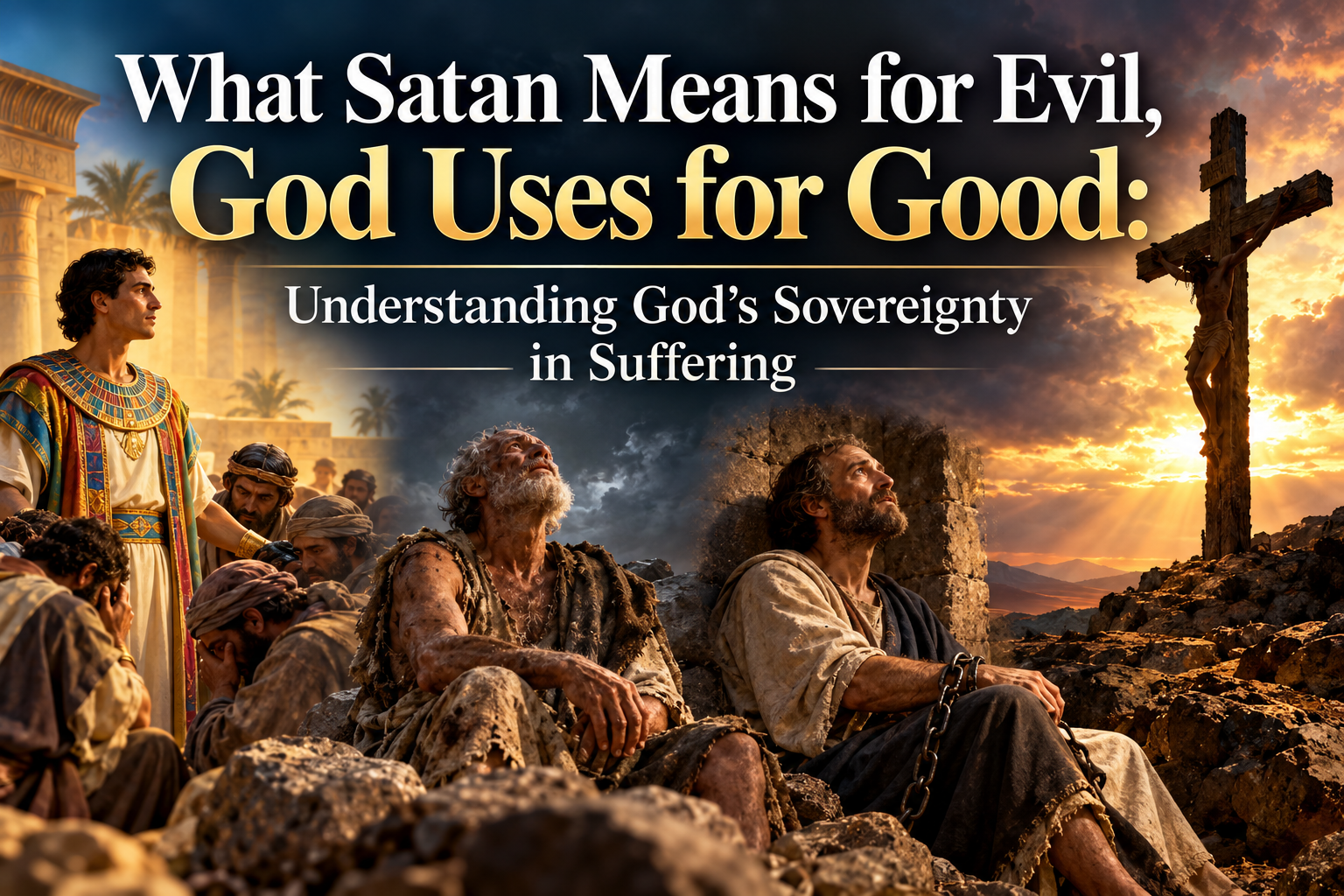
What Satan Means for Evil, God Uses for Good: Understanding God's Sovereignty in Suffering
One of the most challenging questions confronting Christians is why an all-powerful, perfectly good God permits evil and suffering to exist. The question becomes especially difficult when suffering appears undeserved, prolonged, or devastating.
Why does God allow faithful believers to experience debilitating illness, persecution, betrayal, financial hardship, or the loss of loved ones? Why does He sometimes answer prayers for deliverance while allowing other believers to endure years of suffering? And if Satan seeks to destroy God's people, how can God permit his activity without compromising His sovereignty?
Scripture does not answer every philosophical question concerning the existence of evil. Nevertheless, it reveals something remarkable about God's relationship to evil and suffering: evil never possesses the authority to frustrate God's ultimate purposes.

Paul's Thorn in the Flesh: Finding God's Strength in Human Weakness
Why did God refuse to remove Paul's thorn in the flesh? This biblical and theological study examines how God uses suffering to cultivate humility, dependence, perseverance, and Christlikeness—and why Paul could declare, “For when I am weak, then I am strong.”
God’s Purpose in Suffering: A Study of Romans 8:18–39
When suffering continues, we often ask more than whether it will end. We ask whether God remains good, whether he hears us, and whether our lives still have meaning. Romans 8:18–39 speaks to these questions with an assurance grounded in God’s saving work. Paul does not explain the specific reason for every affliction. He does show where God is taking his children and why suffering cannot separate them from his love. (Rom. 8:18–39)
The chapter begins with freedom from condemnation in Christ and describes believers as God’s adopted children. Their suffering therefore occurs within an established relationship of grace. Paul connects sharing Christ’s sufferings with sharing his glory, but this does not mean our suffering earns salvation or supplements Christ’s atoning death. Those who belong to Christ share his path through affliction toward resurrection life. (Rom. 8:1, 14–17; 3:24–26)
This relationship helps us read the passage as a whole: future glory gives hope, the Spirit helps present weakness, God carries forward his saving purpose, and Christ’s love remains secure. The sufferer’s immediate experience matters, yet it cannot provide the final verdict on God’s faithfulness. (Rom. 8:18–39)

When God Doesn't Remove Suffering: Understanding Grace in Weakness
What are we to believe when we ask God to remove suffering and the suffering remains? This question becomes urgent when pain continues for years, a loved one’s condition worsens, or prayer seems to meet silence. An explanation that sounds satisfactory in a classroom may feel thin beside a hospital bed. We need a theology that can tell the truth about anguish while giving us reason to trust God.

Where Is God in Alzheimer’s, Dementia, and the Loss of the Mind?
Alzheimer’s disease and other forms of dementia present a profound theological challenge because they progressively impair memory, language, reasoning, self-awareness, recognition, and the ability to express faith. If human identity is located primarily in consciousness or rational cognition, dementia can appear to diminish not merely mental function but personhood itself. A biblical theology of dementia therefore requires a more adequate theological anthropology—one that recognizes the distinction and relationship between body, soul/spirit, and mind within the unity of the human person.

Why Does God Allow Suffering? A Biblical Theology of Suffering and Providence
Why does a loving and sovereign God allow suffering? This biblical and theological study explores the relationship between human suffering, divine providence, and God's purposes in a fallen world. Drawing from Scripture, it examines how suffering relates to God's sovereignty, the believer's spiritual growth, and the hope of redemption through Jesus Christ.