

Christian Gray Divorce: When a Lifelong Covenant Ends in Later Life
Gray divorce is becoming increasingly common among Americans over fifty, raising difficult questions about marriage, aging, depression, disability, and lifelong commitment. Why do marriages that have endured for decades sometimes end during retirement? This biblical and theological study examines the causes and consequences of gray divorce, the importance of spiritual compatibility, and the church's responsibility to teach and uphold marriage as a sacred covenant before God.
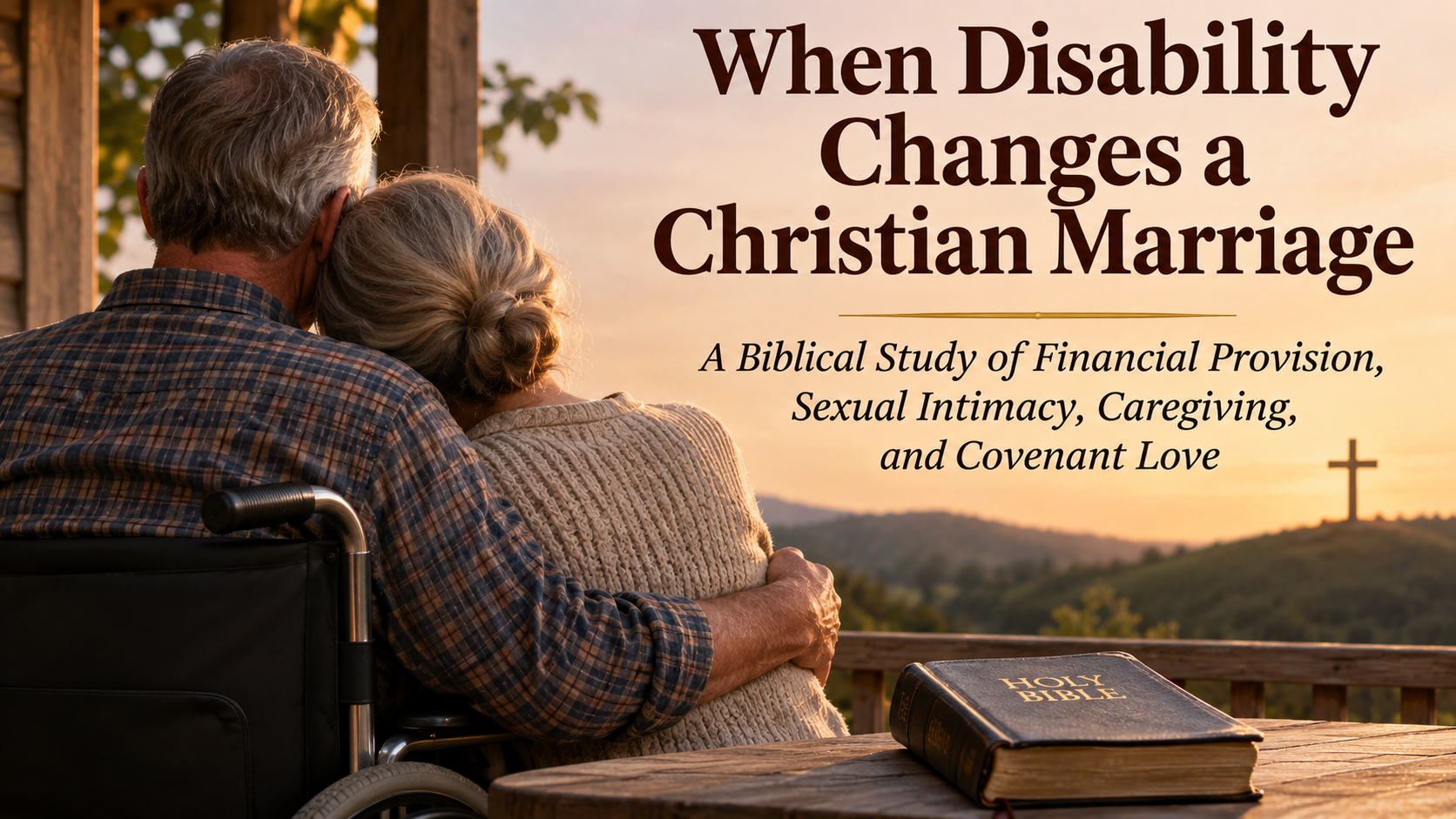
When Disability Changes a Christian Marriage
Most Christian couples enter marriage anticipating a shared life involving companionship, financial stability, household responsibilities, sexual intimacy, and mutual support. Although they recognize that suffering and hardship are inevitable possibilities, few fully anticipate how disability or chronic illness might alter nearly every aspect of their relationship.
A husband who once supported his family through employment may become unable to work because of a spinal condition, neurological disorder, chronic pain, or progressive disease. His wife may consequently become the household's primary wage earner while also assuming responsibilities previously shared between them.
In another marriage, a wife may develop a debilitating illness that prevents her from performing ordinary household responsibilities or participating in sexual intimacy. Her husband may find himself balancing employment, domestic responsibilities, and caregiving.
These circumstances often create more than practical difficulties.

When Shepherds Betray the Flock
A Crisis That Requires More Than a Settlement
For Christians who have loved the church, served in ministry, and trusted pastoral leaders, reports of sexual abuse can produce grief as well as anger. The injury reaches beyond the conduct of one offender. When leaders dismiss a disclosure or protect a colleague at another person’s expense, the community entrusted with spiritual care can become a source of further harm. The question is therefore theological: what does faithfulness to Jesus require when someone entrusted with His flock abuses that trust?
A settlement may compensate a claimant and end litigation. It does not, by itself, establish that a church has confessed wrongdoing, disciplined responsible leaders, repaired its practices, or provided adequate care. Neither an institution’s financial payment nor its public statement can substitute for the moral responsibilities Scripture places upon shepherds. God condemns leaders who serve themselves while neglecting the weak and injured. (Ezek. 34:1–10.)

When God Doesn't Remove Suffering: Understanding Grace in Weakness
What are we to believe when we ask God to remove suffering and the suffering remains? This question becomes urgent when pain continues for years, a loved one’s condition worsens, or prayer seems to meet silence. An explanation that sounds satisfactory in a classroom may feel thin beside a hospital bed. We need a theology that can tell the truth about anguish while giving us reason to trust God.

What Does the Bible Say About Anxiety, Worry, and Fear?
Anxiety, worry, and fear involve the whole person, affecting thoughts, emotions, bodily responses, relationships, and spiritual life. Scripture addresses these experiences through its teaching about God’s providence, human responsibility, humility, prayer, love, and the care of the Christian community. Jesus confronts worry that expresses distrust of the Father, yet Scripture also portrays faithful believers experiencing fear, anguish, and distress. Consequently, neither every anxious feeling nor every anxiety disorder should automatically be classified as personal sin.

Christian Responsibility Toward Those in Need: What Does the Bible Require?
Scripture presents compassionate care for those who suffer as an essential expression of genuine Christian faith. Rooted in the sacrificial love of God revealed through Jesus Christ, biblical love (agapē) extends beyond emotional affection or verbal expressions of concern to practical acts of mercy, generosity, and self-giving service. First John 3:16–18, James 1:27, James 2:15–16, and the teachings of Jesus establish that professed love for God cannot be separated from concern for vulnerable and suffering people.

Where Is God in Alzheimer’s, Dementia, and the Loss of the Mind?
Alzheimer’s disease and other forms of dementia present a profound theological challenge because they progressively impair memory, language, reasoning, self-awareness, recognition, and the ability to express faith. If human identity is located primarily in consciousness or rational cognition, dementia can appear to diminish not merely mental function but personhood itself. A biblical theology of dementia therefore requires a more adequate theological anthropology—one that recognizes the distinction and relationship between body, soul/spirit, and mind within the unity of the human person.